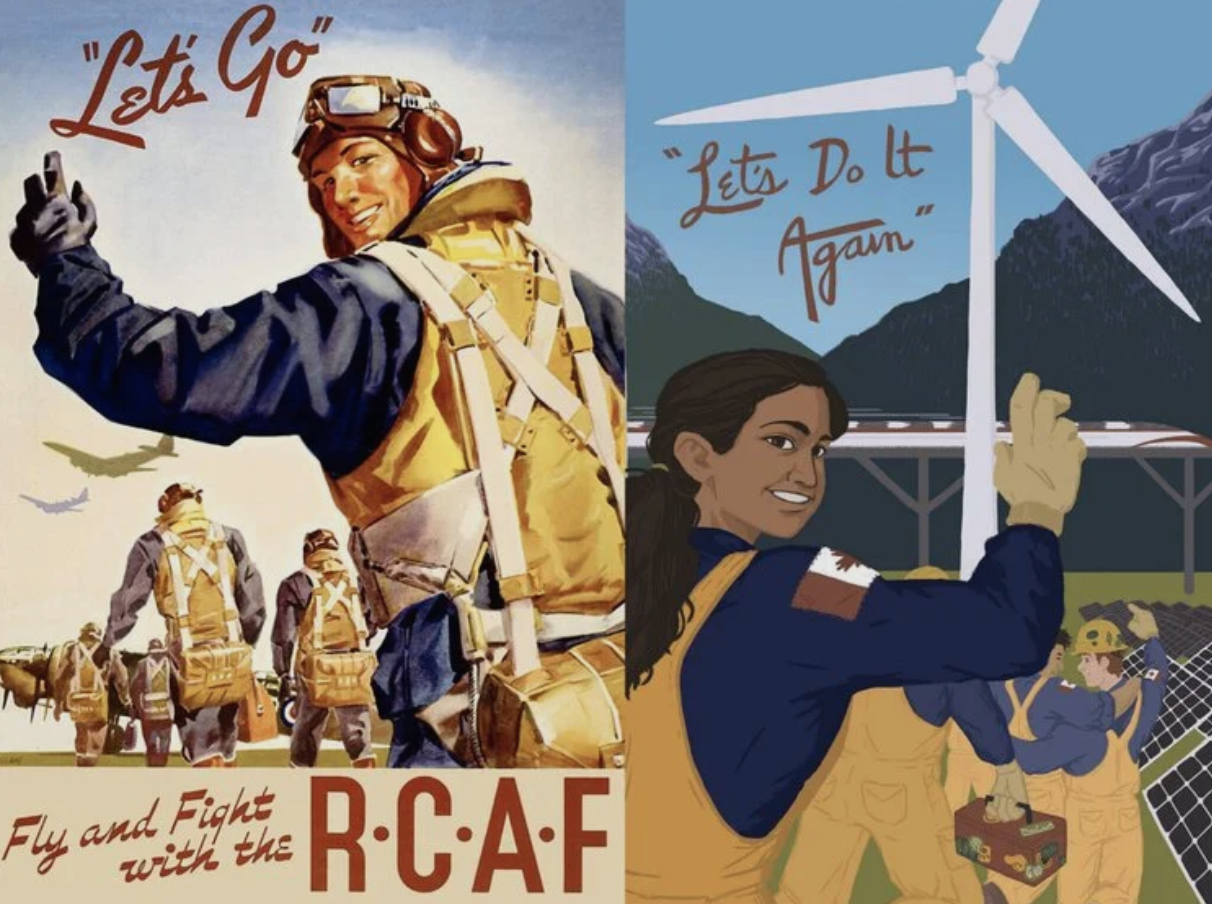
Image credits: Joseph Sydney Hallam and Meital Smith
About the Climate Emergency Unit
& what we hoped to do
The Climate Emergency Unit launched in January 2021 as a five-year project of the David Suzuki Institute. After the publication of Seth Klein’s book A Good War: Mobilizing Canada for the Climate Emergency, Seth and the David Suzuki Institute board conceived of the Climate Emergency Unit as a time-limited project to initiate joint campaigns and coalitions to advance the emergency policy ideas proposed in the book.
OUR GOALS
The overarching goal of the Climate Emergency Unit was to press for the implementation of wartime-scale policies to confront the crisis, like we tackled an earlier existential threat – the rise of fascism during the Second World War. The CEU’s mission was to mobilize Canadians to press politicians to implement climate emergency legislation and policies that would dramatically reduce Canada’s greenhouse gas emissions. We sought to press leaders into genuine emergency mode by building coalition tables – federally, provincially, and sectorally – around transformative emergency ideas.
With a team of between 7-8 people for most of the five years, the CEU worked to build public understanding of the necessary speed and scale of government action using its “6 Markers of Climate Emergency” framework. Our contention was that to achieve change at the speed and scale required, the climate emergency requires a new mindset to mobilize all of society, galvanize our politics and fundamentally remake our economy. All the campaigns were chosen because they hit multiple markers within this framework.
The Climate Emergency Unit was not intended primarily to organize individuals. Rather, our work was focused on “organizing organizations” – cajoling other organizations and institutions into emergency mode and convening them into coalitions and joint campaigns to collectively build a drumbeat for genuine climate emergency action and policies.
Additionally, our desire was to focus on engaging organizations from outside the traditional environmental movement, seeking to mobilize institutions and groups from the health, faith, labour, business, youth, arts and culture, and community sectors.
We also gave special attention to various elements of just transition, believing that failure to provide workers and communities that currently feel tied to the fossil fuel economy with a compelling counter-offer represented a core barrier to successful climate mobilization. Consequently, flagship CEU campaigns sought to successfully win a federal Youth Climate Corps (YCC) program and a Just Transition Transfer (JTT), while the Fair Shares project drew attention to the urgent need for Canada to meaningfully contribute to global just transition.
These audacious and transformative programs would communicate climate emergency while providing job training and employment to both youth and workers currently reliant on high-GHG emitting industries. Meanwhile, the Fair Shares project made the case for providing significant investment and financing for a genuine, equitable global energy transition. We also helped to seed a Just Transition Coalition in Newfoundland and Labrador, which now resides within the Newfoundland and Labrador Federation of Labour (which will carry on its work into the future).
Mission Report: Lessons and Legacies from the Climate Emergency Unit’s 5-Year Project
The Climate Emergency Unit has come to the end of its mission. In this report, we provide highlights of our key campaigns, offer reflections on what worked and what didn’t, and share our hopes about what the project will leave behind. It is intended to be a resource for our allies in the climate justice movement, along with a mix of parting encouragements and friendly provocations.
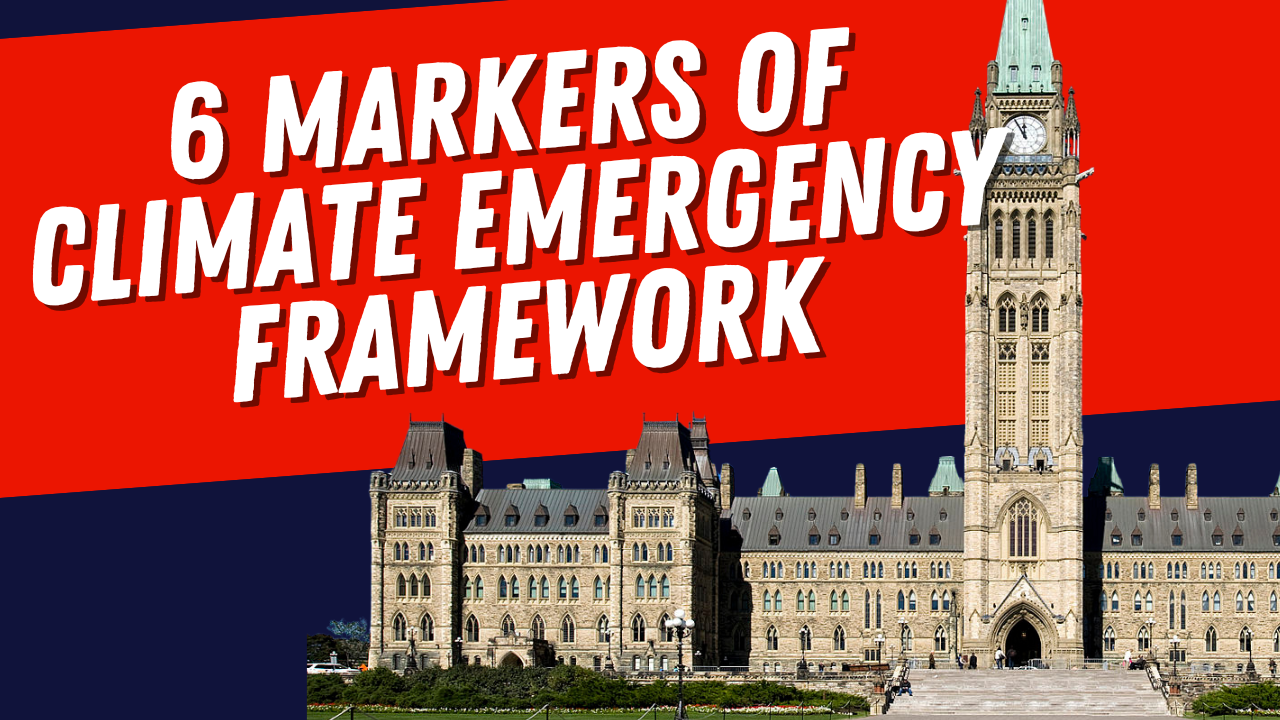
Watch the Climate Emergency Unit’s last 12-minute video on the 6 Markers of Climate Emergency Framework.

In this video, learn how 4 key lessons from Canada's WW2 mobilization can be used to take action on climate change by Canadian governments and institutions.
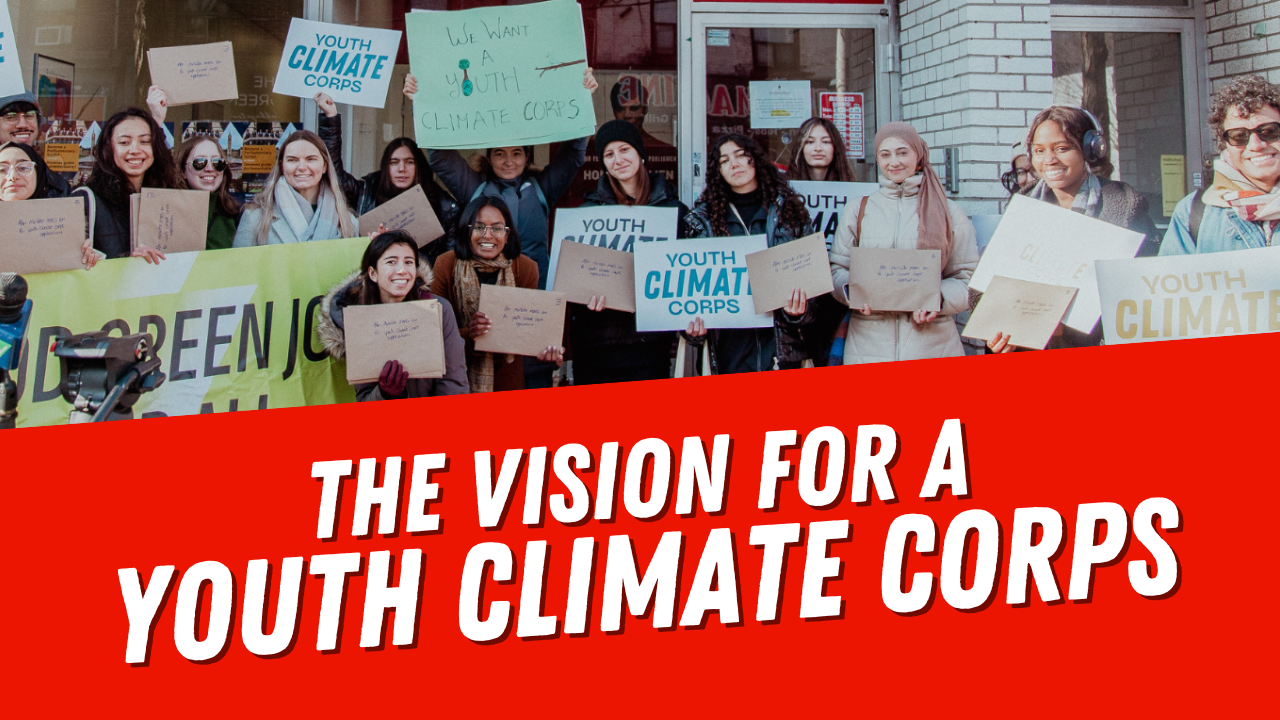
Watch the mobilization video for the Youth Climate Corps campaign that outlines the inspiring vision for this climate and job solution.
THE FINAL UNIT TEAM (follow us at the links below)
Seth Klein (Team Lead)
Anjali Appadurai (Campaigns Director and leader of the Diaspora and Fair Shares projects)
Erin Blondeau (Communications Director)
Juan Vargas Alba (Alberta organizer and national co-lead of the Youth Climate Corps campaign)
Emiko Newman (coordinator of the BC Climate Emergency Campaign)
Doug Hamilton-Evans (CEU Project/Campaigns Manager)
Bushra Asghar (national co-lead of the Youth Climate Corps campaign)
