This 6-part podcast series on the 6 Markers of Climate Emergency is a segment of the Break In Case of Emergency podcast.
-

Emergency Marker 1: Spend what it takes to win (w/ Caroline Brouillette & Seth Klein)
Episode 1 of our 6-part special series begins with the first marker of the climate emergency: spending what it takes to win. Host Erin Blondeau is joined by Seth Klein and Caroline Brouillette to explore what real, transformative climate investment would look like, drawing parallels to Canada’s WWII mobilization. Together, they break down why today’s spending falls far short, and why committing at least 2% of GDP annually is both doable and necessary. They dig into ending fossil fuel subsidies, taxing windfall profits, and creative revenue tools like aviation pollution charges. It’s a clear-eyed conversation about ambition, urgency, and the choices that define whether we win this fight.
-
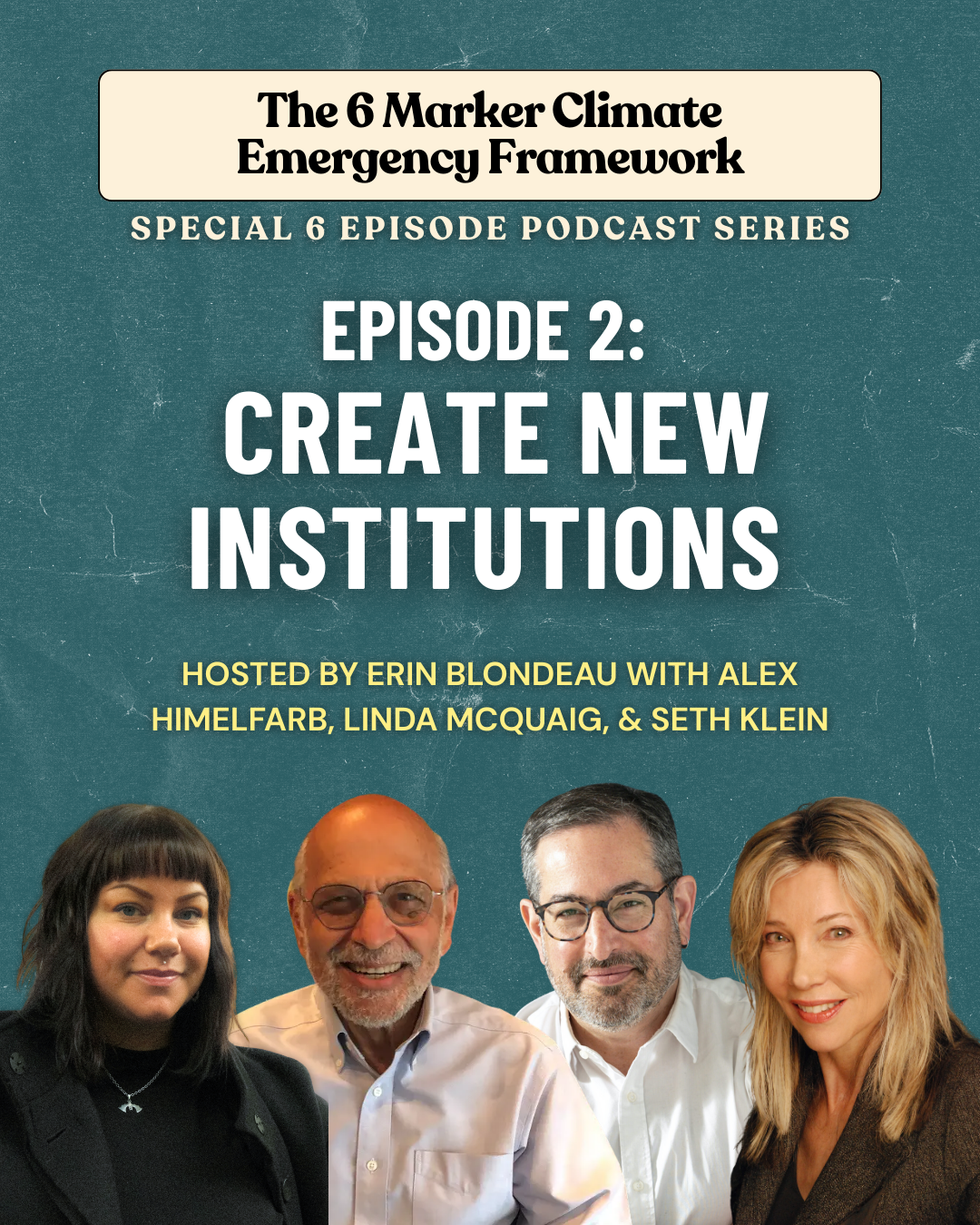
Emergency Marker 2: Create New Institutions (w/ Alex Himelfarb, Linda McQuaig & Seth Klein)
In episode 2 of our 6-marker series, we turn to the institutions we need for an emergency-scale response. Erin Blondeau speaks with Alex Himelfarb, Linda McQuaig, and Seth Klein about why relying on private incentives hasn’t worked, and how Canada once excelled at building bold public institutions. From Connaught Labs to Ontario Hydro, they revisit the legacy of Crown corporations and imagine what new ones could achieve today: from publicly owned renewables to EV manufacturing to national retrofit programs. They also explore the promise of a Youth Climate Corps. It’s a call for imagination, democratic accountability, and rebuilding the public capacity we’ve allowed to erode.
-
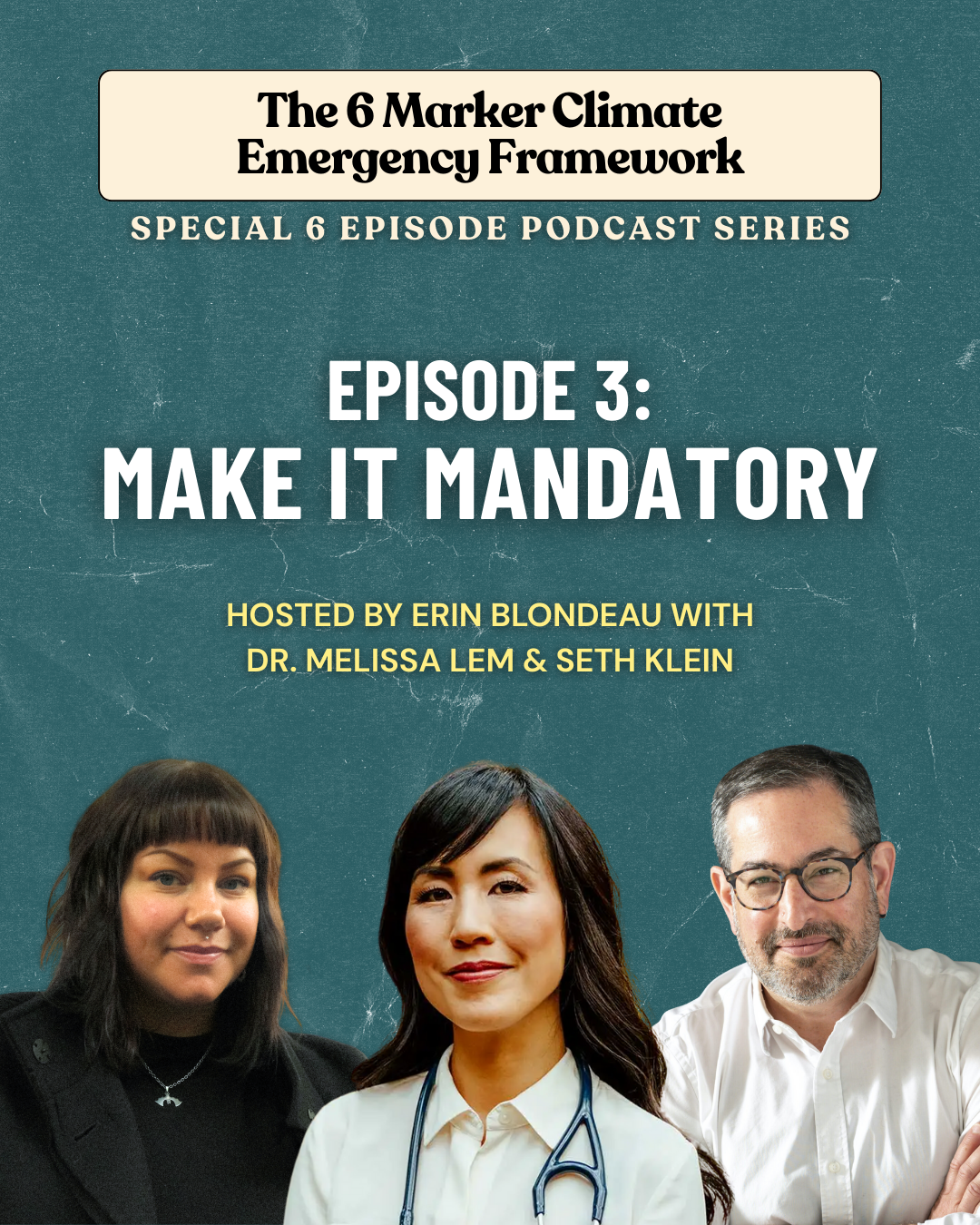
Emergency Marker 3: Make It Mandatory (w/ Dr. Melissa Lem & Seth Klein)
In Episode 3, the series confronts a critical shift: moving from voluntary climate action to mandatory rules that match the scale of the crisis. Erin Blondeau and Seth Klein speak with Dr. Melissa Lem, whose experience as a family physician brings urgency and clarity to the conversation. Reflecting on the deadly 2021 heat dome, they discuss mandatory measures like banning fossil fuel advertising and phasing out gas in new buildings. They also highlight the power of community-led responses and the growing leadership of health professionals calling for decisive action. This episode underscores that voluntary approaches are no match for an emergency.
-
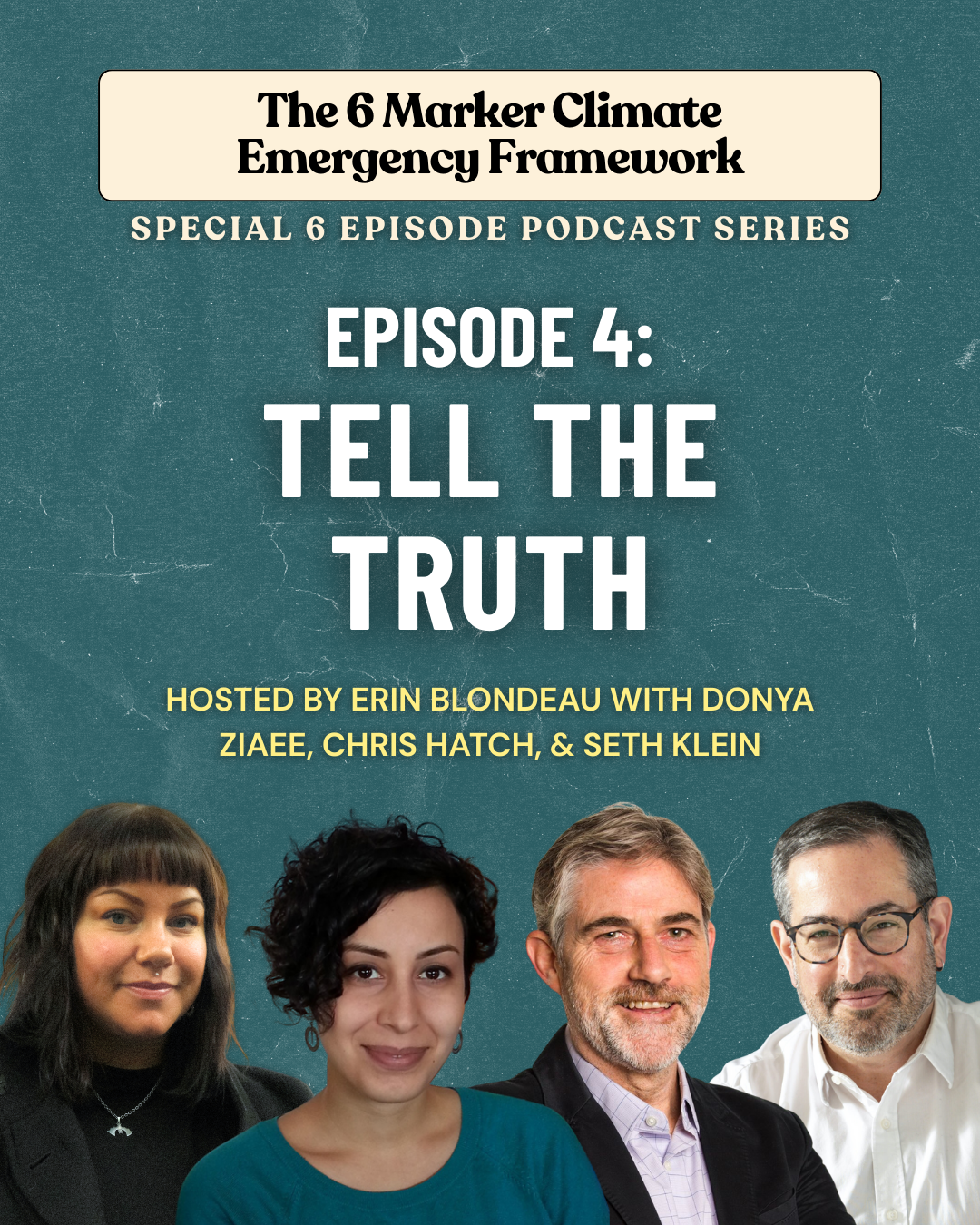
Emergency Marker 4: Tell the Truth (w/ Donya Ziaee, Chris Hatch & Seth Klein)
Episode 4 turns to one of the most foundational markers of emergency leadership: telling the truth. Host Erin Blondeau brings together Donya Ziaee, Chris Hatch, and Seth Klein to examine why honest, urgent communication is essential in a crisis, and why Canada isn’t getting it. They dig into the failures of mainstream media, the rise of independent outlets, and the influence of fossil fuel advertising. The conversation makes the case for clear, evidence-based reporting that includes context, solutions, and a sense of agency, not doom. Truth-telling, they argue, is what allows societies to mobilize, and what’s been missing for far too long.
-
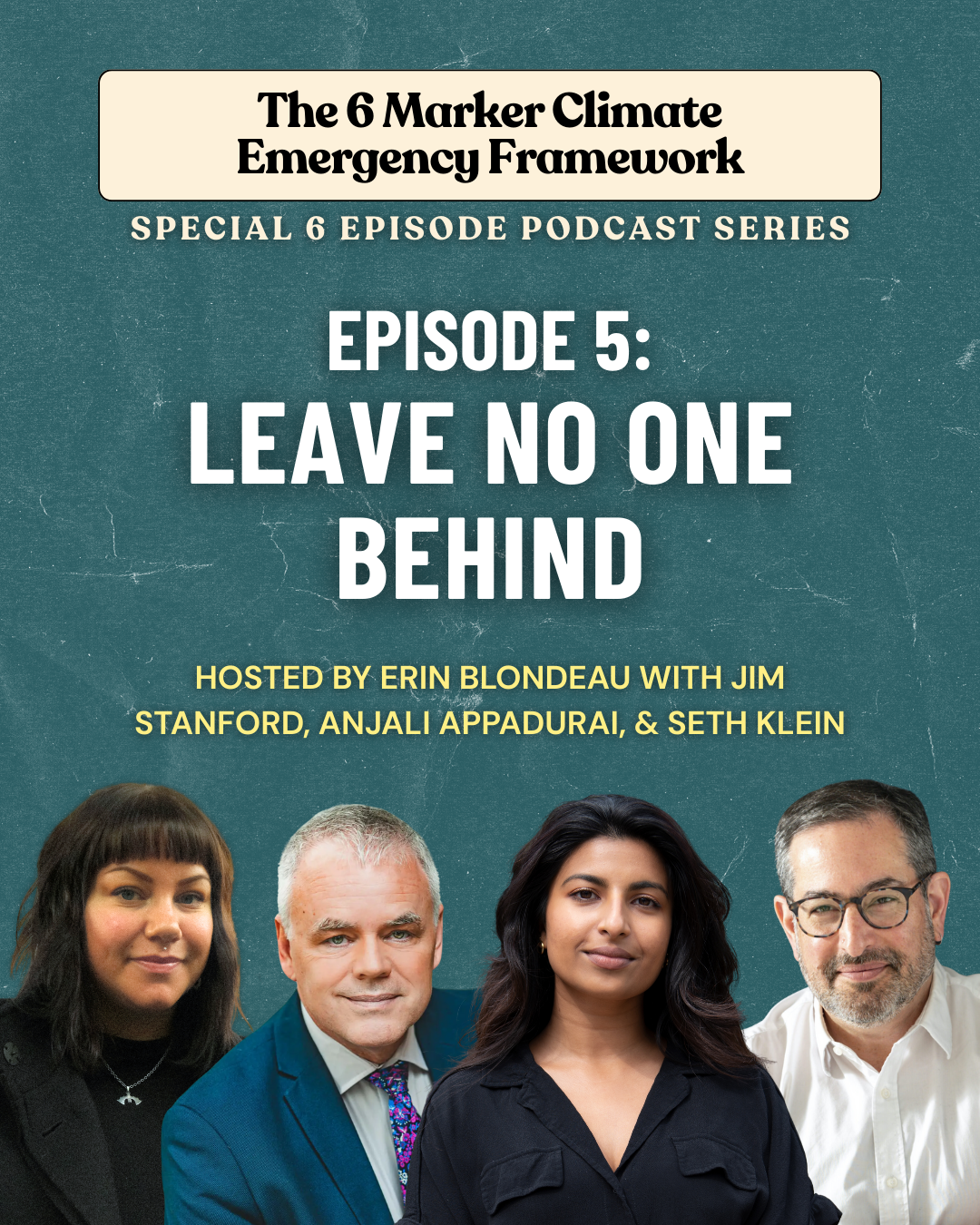
Emergency Marker 5: Leave No One Behind (w/ Jim Stanford, Anjali Appadurai & Seth Klein)
Episode 5 of this 6-part special series takes on the equity marker: leaving no one behind. Erin Blondeau speaks with economist Jim Stanford, campaigner Anjali Appadurai, and strategist Seth Klein about what just transitions must look like in practice. They explore the realities for fossil fuel workers, the importance of linking climate action to economic fairness, and Canada’s responsibilities globally. Their conversation highlights that climate action succeeds only when it’s grounded in solidarity: supporting workers, expanding public services, addressing inequality, and ensuring that communities most impacted by the crisis are centred in solutions. It’s a reminder that justice isn’t an add-on: it’s the strategy.
-
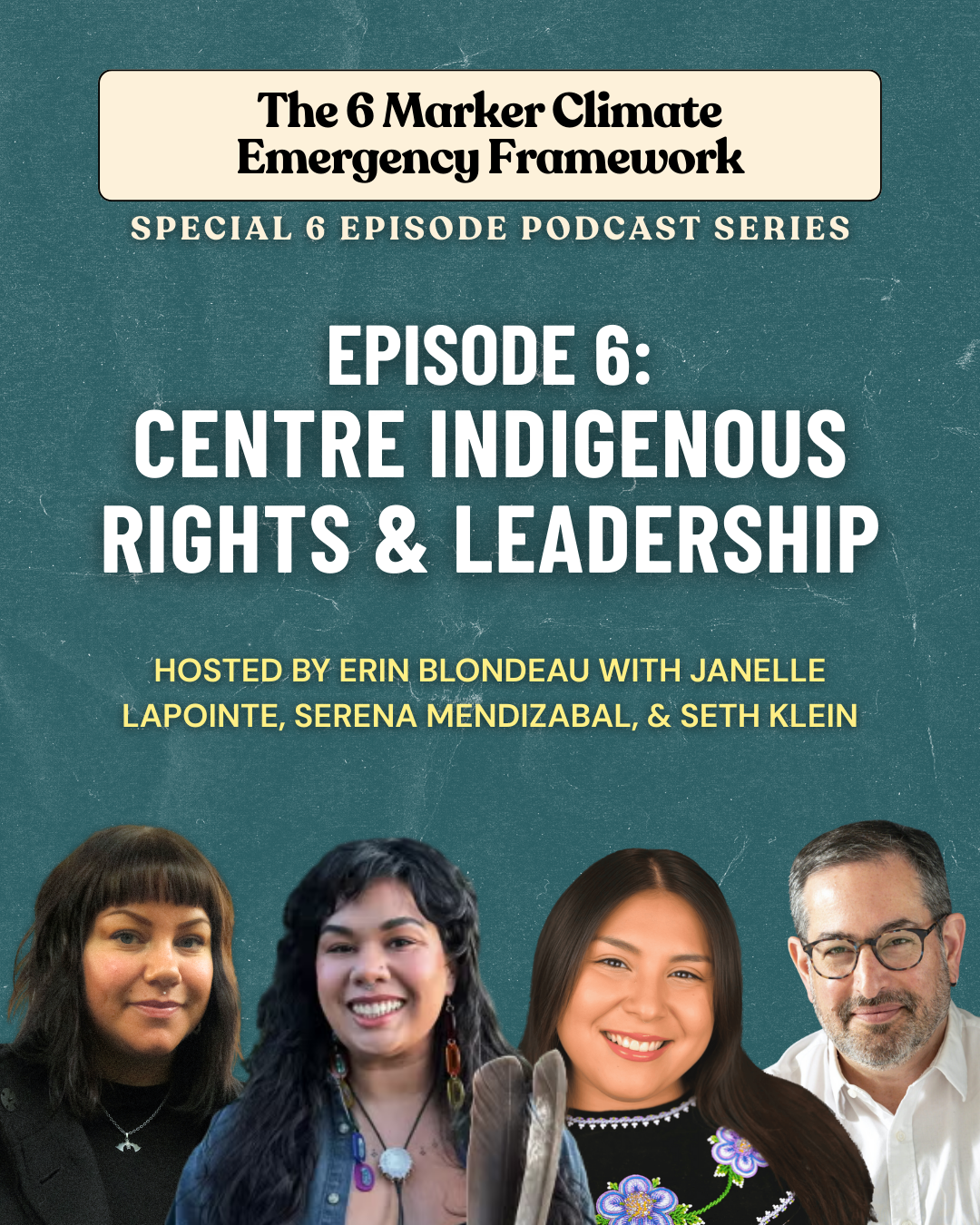
Emergency Marker 6: Centre Indigenous Rights & Leadership (w/ Janelle Lapointe, Serena Mendizabal & Seth Klein)
Our special series concludes with a marker that grounds all the others: centring Indigenous rights, title, and leadership. Erin Blondeau speaks with Janelle Lapointe, Serena Mendizabal, and Seth Klein about the transformative potential of Indigenous-led climate action. They discuss energy and food sovereignty, cultural revitalization, and the community-driven projects already charting a different future. They also examine how governments and industry continue to prioritize extraction over Indigenous-led solutions, and what a genuine emergency response rooted in Indigenous sovereignty would require. It’s a powerful closing conversation about justice, leadership, and the pathways we must follow to confront the crisis honestly.